
PETALS FOR ARMOR TURNS 5
A thorough retrospective review on Hayley Williams' first solo album.

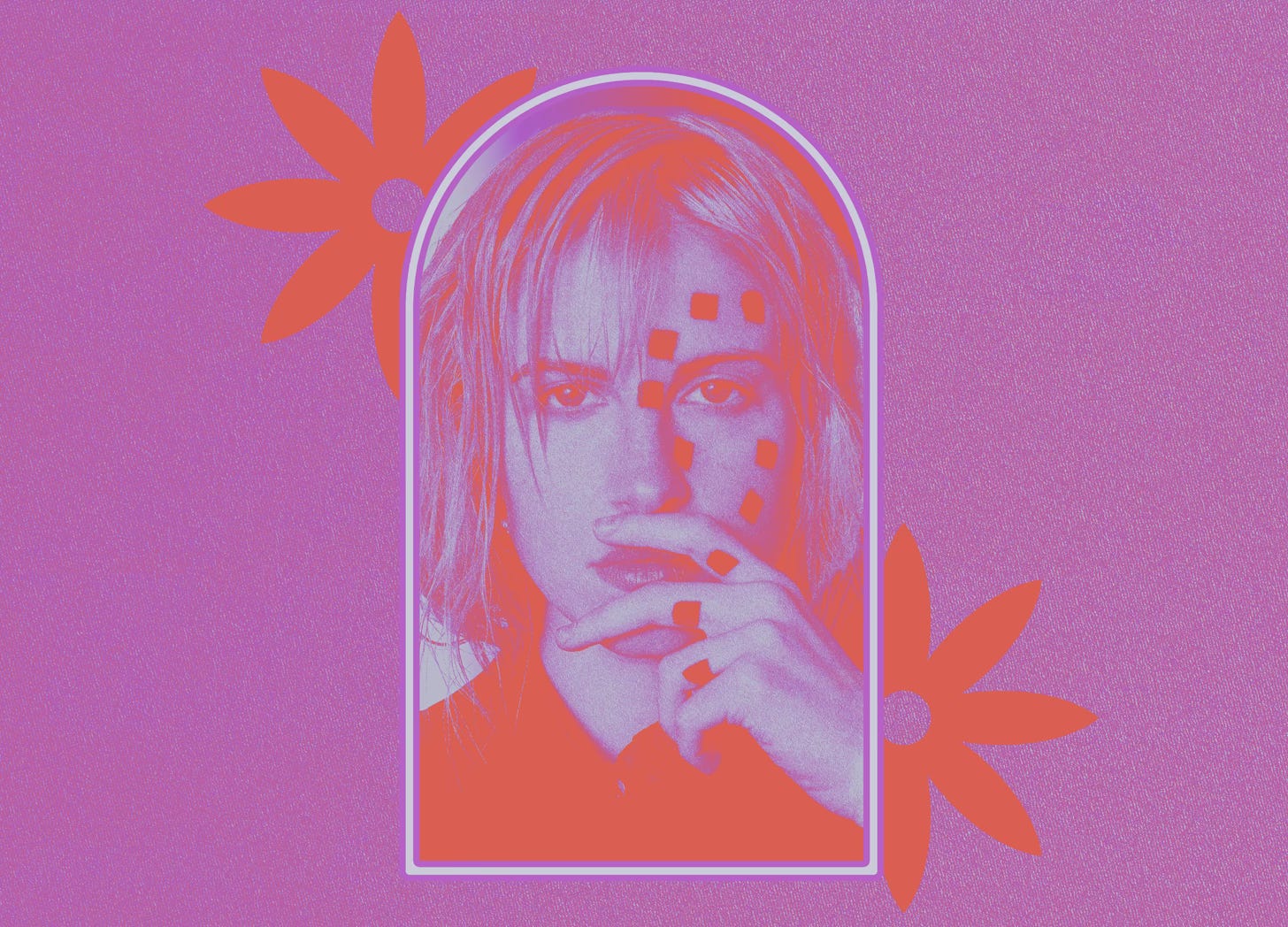
Preface: this review — in various scraps and scribblings — was sitting dormant for a good few years, until I was nudged with violent reminders that PFA was turning five. It summoned me to think about the record as it’s aged - one Paramore studio album, several headlining tours, an Eras summer, and a label departure later.
Not only that, but I can’t help but remember the sad (though necessary) cancellation of the supporting Petals for Armor tour in May 2020, and the release of Hayley’s more introspective, self-mastered follow-up, ‘Flowers for Vases’ - both covid-induced - the very definition of a mixed blessing.
Music that bookmarks a cloistered, uncertain time for humanity will now always do so - a permanent blot in history, for better or worse. ‘Petals for Armor’ was a pandemic album, purely by accident, but was far more of a personal reflection - rather than a collection of tawdry fight songs, a call for community togetherness, or any other on-the-nose viral reference that would have you sucking your teeth five years down the line.
The album’s content may be dissociated from the pandemic, in that its writing pre-dated any rumblings of what would happen, but it will forever serve as a soundtrack for that period - a mood-lifter, a time-placer, an escape from the perpetual indoors.
Hayley actually decided against postponing the release date in light of everything, concluding that we probably needed art more than ever.
”I just need to get it out of my body. I need the release”, she tells Stereogum.
Anyone who has followed Paramore for the last decade or so, even casually, has seen Hayley Williams go through her own personal hell — of course, only a fragment of which the public actually bear witness to. For what little we do see, her younger years rife with press-fuelled misogyny and assumption, at times resulting in her being drawn up like a fame-hungry cartoon villain, and years of complicated loss.
But, thank goodness, Williams has a remarkable level of resilience. For all she’s endured, and equally, for the illusionary, sacrosanct image of performance that a pint-sized, teenage Hayley cemented - really, less a “fiery haired rocker”, and more simply a young girl doing what she loves with her friends - the sparkle has now melted away into something more adult, and human.
‘Petals for Armor’, as a title, was composted in therapy. Hayley describes floral imagery becoming vital to her healing, particularly through the body and energy work she’d been undertaking. Her instinct was to make the link between flowers, the earth, and death — a vision of herself decaying in the dirt.
But from this came the realisation that she was not dead or dying - but instead full of feelings so pointed, they jutted out of her at all angles. She recalls in one session, the therapist she had been seeing left her alone in the room - and upon opening her eyes, she was surrounded by rose petals.
Reinventing her seemingly doomed mirage, Hayley rose from the dead, grabbed a fistful of flowers, and began to reclaim their meaning: femininity, strength, beauty, regrowth.

Hayley’s found family, in Paramore’s guitarist Taylor York, and drummer Zac Farro, naturally reform here in brief huddles — York on production duties, some co-writing, and additional instrumentation, and Farro drumming on the penultimate and closing tracks. Friends and bandmates since the age of 12, by now they know their recipe as a trio is award-winning, their musical affinity off the charts - but here, Hayley is fully at the helm. These are exclusively her stories to tell.
Paramore’s discography - album to album - follows an astonishing pattern of defeatism and fight, seesawing between the two postures over the course of almost 20 years. However, there’s a mortality to ‘Petals for Armor’: it carries an acquiescence that 2017’s ‘After Laughter’ only just began to settle with.
‘After Laughter’ was a crack in the ice, in terms of opening up - it shattered the mirrors and wafted away the smoke. “Expression is survival” was the album’s lasting maxim that also crossed over into Hayley’s hair dye company, Good Dye Young, and I would argue it became the underlying hypothesis for ‘Petals’, too. “It’s not just a catchy thing I say, it’s kept me alive”, she disclosed to L’Odet.
Hayley’s influences for this album, compiled by her in this playlist, range from the great, unearthly peculiarities of Björk and Radiohead, to the gorgeously somber musical biospheres of James Blake and The War on Drugs.
Such melancholy is obvious in Part I of ‘Petals for Armor’, in which melody - featherlike and, at times, gentle and unimposing - takes a backseat to the rhythm section. Joey Howard, touring bassist for Paramore, provides lush, expansive bass lines for the album. They’re almost superhuman; dissipating the fog to create such a clearance for the vocal.
The particular strength in ‘Petals’ lies in its hybridity, with Solange, Chaka Khan, Erykah Badu and A Tribe Called Quest also sitting on the same playlist of inspirations. Let it be known that Williams actually tried out for a funk cover band while still in school, and has been vocal about her love for R&B and hip hop - but aside from Ain’t It Fun, perhaps, hasn’t flirted much with their elements — at least until now.
The undeniable R&B nuance to ‘Petals’ is likely borne from Hayley’s roots in Mississippi, and her love for her friends/contemporaries in the genre (Moses Sumney, Denai Moore). A feature of alternative, modern R&B is dissonance: an inherent aspect of jazz music, and a way of exploring notes outside of a scale in aims of unsettling, or making you uncomfortable - a characteristic of any good art: to evoke a response.
Coupled with the sourness of Radiohead as an influence, in Hayley’s music comes a discordance - an eerie incompleteness - that she plays with. It’s a low energy chaos, an insistence of tension. As Judy Rodman writes about dissonance, “the very discomfort makes you want to resolve it! If you let it, it can move you forward.”
There were a few complaints about the irregularity of Williams’ release process - a trilogy of 5-track EPs issued in near-monthly doses until the album ‘completed’ on its release date - but I, personally, love it.
Oftentimes, a whole album on release day is a lot to absorb, and for a story as complex and segmented as Williams’, why not challenge convention? As illustrated in the box set (see here), each part of the album bolsters such heavy emotional themes, yet in each, she plays with genre like clay - moulding it with such ease to embody her mood and paint a scene of life so three-dimensionally.
PART I:
The opening chapter of PFA is the equivalent to stumbling around in dark and digging deep into the dirt with your bare hands - maybe to uproot, or to unearth skeletons. The inner sleeve on Part I’s vinyl includes the words “rage”, “lust”, “grief”, “envy”, “mercilessness” and “femininity” - the themes falling onto a big Venn diagram, intertangling and making for something more saturnine and bewitched.
Hayley aligns each album part with the elements, assigning fire to part I. In all its quiet anger (‘Simmer’) and slow spread, it certainly burns like one — but also ignites flames (‘Sudden Desire’) and scathes with jealous heat (‘Creepin’).
The first three songs on the EP also have accompanying - very cryptic - video series. They’re deliberately feral, with Hayley running in the nude in the ‘Simmer’ video, but rich in purposeful imagery, so require a bit of decoding. There’s hint of a metamorphosis, with ‘Leave It Alone’ illustrating her sluggish reemergence out of a human-sized cocoon. The final video in the trilogy, for ‘Cinnamon’, shows Hayley bursting into full peacock-feather hair, makeup and dress in her own home, to literally dance with her demons.
Part I plays not just with natural woods and beiges, but the deep reds and blacks of embers and ashes to muddy the musical palette. Beneath this veil of sound, we’re beckoned into the undergrowth.
Simmer: A fierce first offering, which hisses, spits and seethes its way into a pregnant sigh. Syncopated vocal percussion and a pulsating synth-lead - falling on every odd beat - boil into the album’s first word, “rage”: pitched with venom. It carries the same primitive, God-summoning fury as a Florence and the Machine song, flame-tongued particularly in its verses: “If my child needed protection / From a fucker like that man / I’d sooner gut him / ‘Cause nothing cuts like a mother” - a maternal defensive, maybe the most blinding feminine rage, and a generational weight for Hayley — having seen both her mother and grandmother fall into similar romantic patterns.
‘Simmer’ is cinematic in melody, as rage-plagued and fiery as it is lyrically - but its bridge is a softer, apparitional exorcism of that suppressed anger. “Wrap yourself in petals” comes in ghostly chants (see: ‘Separator’ by Radiohead), a reminder to embrace the femininity along with the mental violence — the main refrain to “simmer down” now echoes (and maybe even ridicules) the internalised, womanly demeanour: to simply count to ten, calm down, and move on.
Hayley, grappling with this power, questions just how to “draw the line between wrath and mercy”. Is it healthy for such resentment to be internalised, time after time? How many times can someone forgive before they break? Maybe it’s just easier to tiptoe the line.
Leave It Alone: Undoubtably the most mournful on the album, ‘Leave It Alone’ is chillingly stark - leaving breathing room for pain-soaked lyrics about Hayley “becoming friends with the noose that I made”, and being overwhelmed by the idea of losing the ones she loves (“Who else am I gonna lose before I am ready?”). It’s funeral-like and aching, exposing truths so human to ignore, for sake of taboo and mental-wellbeing.
Daniel James, professionally known as Canon Blue, engineered the hauntingly beautiful strings that dress up the frailty, robed in white and coifed in carnations. The bass is prominent and earthy, and more melodic than your typical bass line. It’s gentle and accompanying enough that it acts as a comfort, a friend to lean on - something much needed beneath such a raw confessional. Sadness aside, the companionship between bass and strings alludes to the softness of Solange’s ‘Cranes in the Sky’, or any song from Björk’s lullabaic ‘Biophilia’ — persuasive in its silklike qualities, but ultimately catching you in its thorns.
Cinnamon: This spook-funk track is an eclectic blend of swing beats, chunky bass, and eerie, pitched-down vocals and sample strikes. Selectively-timed silences and the unusual hook of “ooh”s and “ah ah ah”s - at first sounding woeful, and gradually bursting into more of a victory cry - suggest an imminence, or a kinesis - as Hayley moves from room to room, trying to figure out the power in domesticity. In the present indoor world, the song feels perfectly, and unfortunately, timed.
After a moment of self-discovery in the bridge, in the white-room quiet - just accented by breezes of the rhythm section, the final chorus of ‘Cinnamon’ erupts into a glorious, Janet Jackson-esque funk-breakdown, all layers of vocals sparring to a conclusion. “I’m not lonely baby, I am free” becomes a solid mantra, and a proclamation of that homegrown femininity - the authority of ownership over your own space, and the personalisation of it.
Most crucially, it acknowledges the pride in homely goods being thought of as ‘feminine’, whether they take the form of a vase of flowers, smell like cinnamon, or otherwise. Traditionally, femininity is equated with weakness and submission, but in ‘Cinnamon’, there is dignity in reclaiming the feminine in place of great strength.
Creepin’: ‘Creepin’’ trudges and crawls in the same way a swamp-monster surfaces from the depths: freighted with dirt and hostility. Hayley confronts her envy in this song, directly addressing - and vilifying - her subject, questioning their intent. It’s territorial and sleuthing, with a serpentine bass line that bends and snakes against the ghoulish, effects-drenched guitar parts - provided by one of Hayley and Taylor’s musical heroes, Mike Weiss of mewithoutYou.
The song is stylistically reminiscent of his band, with the riffs alone capable of holding so much melancholy and shame — Weiss’s musical sorcery, and probably his experience with instrumental storytelling, allows for greater depth. Taylor’s production shines through especially, as he garnishes the track with distorted, panning whispers, and once again pitches down the backing vocals to instil a little bit of horror. Lyrically, it’s bloodthirsty - holding a crucifix to her vampiric archenemy with promise of “bleed[ing] holy water”, and being around her will unknowingly expose them to the “daylight” — the very poisons that weaken blood (and energy) suckers.
Sudden Desire: Taking a sharp, reluctant inhale, ‘Sudden Desire’ reads like a fatal admission. Instead of inflicting fear, it exudes it. Hayley, over a lusty bass line, empties out her romantic impulses with such haste, it sounds like she immediately regrets ever saying them aloud. The idea of exploring her sexuality is a dangerous cocktail of unease, shame and thrill (“Don’t know if I can deny a sudden desire”). There are real emotional spikes in the track, as she almost seems to realise things in real time: “Everywhere I am, it sticks close like a friend / Just like him / Just like him”, as a lone pad lulls and whirs in the background, making for a nervous ambience - filling space much like the proverbial elephant in the room.
The minimalist verse enkindles an anxiety riddled, impassioned chorus — the perfect counterpart of Björk’s ‘Army of Me’, with its industrial, chomping beats and screaming vocal. It’s the sonic equivalent of a rollercoaster, in its deafening peaks and the troughs in which it draws back to quiet, introspective solitude. Instrumentally, it feels like dread. The opening desires that Hayley projects are mirrored at the very end of the song, maybe suggesting that with everything in consideration, some risks are worth taking.
PART II:
Part II is elemental, too - this chapter Hayley defines as ‘earth’. It’s very much the middle-ground between two extremes: a stepping stone, and the process of re-rooting. These aren’t tracks of much peace or closure, but more a reflective moment — thankfulness for companionship (‘My Friend’), affirmations in both slow balladry (‘Roses/Lotus/Violet/Iris’) and upbeat 80s dance bop (‘Over Yet’). It peaks in its pop-prowess (‘Dead Horse’), and furrows to somber, devastating lows (‘Why We Ever’). Hayley seems to take a look at her surroundings, re-evaluate, and spill her guts on all of it.
The selected words for part II include “pride”, “resilience”, “security”: all declarations of a renewed strength, but the ambiguity of “trust” (lack thereof?), “rebuke”, and “autonomy” (losing? or gaining?) still feel bile-soaked - a castigation of the former evils that still linger, or desperately cling on.
This chapter emerges from the deepest of depths into the broad, startling daylight. A little mud-caked and battle-worn, but brave enough to rise up again and sow some seeds.
Dead Horse: Part II’s bright and bitter opener leads with a spoken intro - a candid phone memo that Hayley attached to Daniel James as means of apology - “Sorry… I was in a depression. But I’m trying to come out of it now”. The memo liquifies into full bounce, lead by a playful mallet synth, sounding like it could be an off-cut from ‘After Laughter’.
With the spirit of the sunshiney Afropop of the Lijadu Sisters, the 80s radio-pop readiness of Phil Collins, and the sirenesque flair of a Blondie song, Dead Horse is a melting pot of all things fun-sounding.
It’s snarky in its reflections, harking back to Paramore’s 2017 release in the lyrics: “Held my breath for a decade”, versus “I’m underwater, no air in my lungs” from ‘Pool’. Much like ‘Pool’, it’s catchy and refreshing - but deceptive in this sense: perfect pop with a poisonous lyrical sting.
Hayley speaks of the song as being the equivalent of “pulling a really deep splinter out”, and is arguably the most sardonic on the record. The ‘ya yas’ feel mocking, like the chanting of a little devil on her shoulder - telling her she should’ve known.
The Farro-directed music video is very mirror-heavy, forcing moments of self-study. Hayley is also shown trying a variety of bold wigs, a little nod to her chameleonic abilities — or a trying on of different ‘selves’, in hopes of finding one that will save you. The most symbolic moment comes when she pours wet concrete in her wedding Docs. Cementing the end of what was, as well as who she was, and condemning a way of ever returning.
My Friend: Rarely do we remember to tell our friends we love them, but Hayley has outshone us all by penning this tribute to her nearest and dearest. Mostly, she says, directed to her companion Brian O’Connor - co-founder of Good Dye Young, and friend since he cut and coloured the eternally recognisable Miz Biz ‘do from the 2007 music video. Hayley compares their duoship to Thelma and Louise: he’s her literal ride or die.
It recognises what comes with closeness: noticing the fine lines, flaws, where you’re prone to falter. Seeing someone for who they are and loving them anyway. The whole song reads as a pinkie promise — “you’ve seen me from every side / still down for the ride”. It’s simple and sweet, audibly comforting - in another universe, The Cardigans could have easily been responsible for this one.
The outro feels like an age old playground rhyme in its incantations, a sincere pledge of “escap[ing] death forever” immortalising their bond - a pact that could never be broken.
Over Yet: Playing on the joke that she turns into an aerobics instructor at Paramore shows, usually all limbs akimbo and darting around the stage with impossibly high energy, ‘Over Yet’ is urgent and motivational all at once.
Somewhere between a dirty, industrial, 80s-vision-of-the-future beat and the unique electronic lightness of a CHVRCHES song, as Hayley put it, it really does feel like a fitness class in the middle of the apocalypse. Lyrically, this rings true too. Weather every blow (“If there’s resistance / It makes you stronger / It’s not the end”) and usher in a greater strength instead (“Get out of your head / Yes, break a sweat”).
While it poses as a workout song (with corresponding exercise video), it’s as much about mental wellness and bettering. It will be a hard grind, but it’s worthy of the effort.
The song’s best mission statement is actually hidden in the backing vocal layer of the song’s ending, an easter egg I only discovered years on: “For every darkened part of me / There’s a light that I can see / Both belong, both are me”, a profound acceptance that sharp dualities coexist in all of us - our experience is what shapes us.
It’s reminiscent of Taylor Dayne’s ‘Tell It to My Heart’, if it was a tad grungier — or like a demo sent by way of Kylie or Madonna — yet it sounds so very ‘Petals’. Howard’s vivid bass-work and York’s guitar garnishing and careful production truly help brand Hayley’s solo material.
Roses/Lotus/Violet/Iris: Arguably the most beautiful song on the album, a velvety and tender dedication to women - appreciating our uniqueness and weeding out the deep-seated nature to compare. The spectred vocal intro drifts in reverse, as if dust particles in shafts of sunlight.
The track is saturated with plant-based imagery. The title, for starters, very cleverly mirroring the old love poem, ‘Roses Are Red’ (violets are blue). ‘Roses/Lotus/Violet/Iris’ itself feels the cousin of a love poem - it’s an ode to femininity.
For all the softness it totes in these comparisons, there’s also mention of “wilted women” and becoming “a thorn in my own side”: a reminder that damage and neglect can - and will - inflict the gentle.
It’s a lavish, full sound: Boygenius as the backing choir, a strings section, and production that glows and swirls. It’s ethereal - almost angelic, especially with the occasional dreamy furnishing of the bend of a pedal steel. The song nearly had a video directed by Kristen Stewart, but unfortunately - again - the pandemic brought all plans to a halt.
With the many, many kinds of flower that grow — in their various blooms, colours, forms, fragrances — we must consider that they are all cherished, and actually, most striking when in a garden of others.
Why We Ever: This was Hayley’s first truly solo recording venture, before she took off on her own to create ‘Flowers for Vases’. It’s a song of two halves - both luscious and honeyed, but also desperately sad.
Singing about a communication breakdown (“Can’t seem to remember why we ever / Felt we had to say goodbye”), there’s an obvious groove that uplifts the whole thing. The instrumentation is sun-drenched and radiant, the song uptempo - you’d almost never guess she was mourning. Then, barely two minutes in, the facade crumbles. It’s almost like she’s remembered why.
Hayley Williams has always had a talent for writing the most heartrending, ruinous piano you’ve ever heard (Paramore’s ‘We Are Broken’, ‘Tell Me How’) - and mid-song of ‘Why We Ever’ is a shining example of her skill. You expect the song to go in one direction, to keep the rhythm, and suddenly you’re over a cliff edge.
At the point the instruments drop out, it sounds so vulnerable. It’s the moment the pin drops. You can hear the creak of the piano, and room is deliberately created for quiet — for the regret to sit and fester. It’s tangibly lonely. It’s a hell of a closer for Part II, and sees Hayley entombing herself back in the earth.
PART III:
To close her story, Part III crashes like a wave. There is a newfound sense of courage beyond the deep inhale of the previous chapter, but we’re not all there yet. The R&B undercurrent of the record becomes tidal, and the funk is pronounced. Now, at last, there’s joy to contend with.
The bouquet of Part III’s liner words are mostly sunnier, too: “pure emotion”, “healing” (‘Watch Me While I Bloom’), “redemption”, “reconnection”… A mending and re-bridging, the results of a hard slog, an emergence out the other side. The emotion is unbridled and plentiful, and a long awaited outpouring of something less ‘tarnished’ or dark. This chapter feels rosy in its hues - hot pinks and magentas, a much warmer, full-bloom palette, like a late springtime exhale. A green space, a thriving garden.
“Acceptance” is the watchword, for me. Not as passive surrender - but as an active, hard-won embrace of every version of the self: bruised, blooming, and everything in between.
Although “fear” and “intimacy” also share the same page, there’s an edge of anticipation to them both. “The opposite of love is fear”, Hayley declares on ‘Pure Love’. She understands she’s standing on the precipice - one leap away from a great fall, or, flight. There’s peril in being at a crossroads, with the danger of being hurt again, but it’s a necessary evil — it reminds you that you’re alive.
Pure Love: With a cheeky “hmph” to create the tone divide between chapters, the next thing that hits our ears are the funky bass stylings of Joey Howard, paving the way. There’s a sensuality to this track, an ease in the hard truths it admits: “If I want pure love / Must stop acting so tough”. In letting down your walls, you can reap the rewards.
The bass line continues to command the vibe, with little synth motifs in the chorus that make the track feel astonishingly retro. The bridge, by comparison, sounds vaguely psychedelic - the phasing and panning of vocals: a little bit of head-spinning disorientation before Hayley, back on terra firma, remembers who she is.
‘Pure Love’ sees Hayley reach vocal heights on this album, bursting into a ferocious belt at the song’s zenith. Her love for Mariah and Whitney feels apparent here. In the verses, however, her voice treads lightly, with a knowing caution - this time, to approach with care.
Taken: “Like if A Tribe Called Quest made elevator music”, Hayley once joked on Twitter. Just like Tribe, there’s a jazz-funk vein to this one. The instrumentation is juicy, with Aaron Steel’s drumming sounding especially tight - and feels like a magic potion of all the groovy greats, from Michael Jackson, to more modern masters, like Thundercat and Unknown Mortal Orchestra.
Hayley pokes fun at public interest in her private life, “If anybody asks you / I’m taken / If anybody wants to know / He is too” — it’s buoyant and sassy at surface level, but deeper down, there’s a glimmer of genuine pride. It feels like any great 90s R&B track at it’s core, Ashanti, or Brandy - definitely a mirror to ‘The Boy Is Mine’ with its declarative hook and territorial circling over a watertight beat.
Despite the fatiguing personal journey this album has abridged for us: “Would I do it all again? / Oh yeah, in a second”, the years of pain, grief - and eventually healing - would be rinsed + repeated it if lead her to the same destination.
Sugar On The Rim: Suitably fit for a lip sync for your life, this song is every bit a drag anthem. With aims of channeling New York’s rave scene moment in the 90s, Hayley and Taylor surprised themselves in the midst of creating something so very different — this is the dark horse of ‘Petals’.
No doubt the most experimental on the record, the fearless spirit of Madonna possesses Hayley - as well as the zeitgeist of melodramatic dance tracks like Animotion’s ‘Obsession’, seeps straight into the song’s marrow.
The nocturnal synth bass sounds like it was extracted straight out of ‘Rhythm Is A Dancer’, and really pulls focus. It ticks all the boxes for a floor-filler, as Hayley uses her lower register to slither amidst the beat, like she’s pushing through a crowded dancefloor. Her verse vocal is so seductive and forward, it almost feels like we’re interrupting.
Hayley again plays with double entendres to paint her picture: the sugared rim of her margarita is the sweetness to the heat of the tequila, gratification after a bitter pill — the cherry on top.
Watch Me While I Bloom: Bursting into full colour unashamedly, Hayley opens this one with a yell. This one is celebratory, an ovation for coming back into her body — a flaunting anthem, like a courtship dance for a technicolour bird of paradise. The bridge sways with dizzying harmonies and vocal layering, reminding me of George Martin’s production techniques on ‘Lucy in the Sky with Diamonds’.
Zac Farro drums on this song - and it actually evokes memories of the 2017-2018 sound of his own band, Halfnoise. Tracks like ‘Scooby’s In The Back’ and ‘All That Love Is’, which had previously been allotted as his time playing frontman at Paramore shows, and just allowed for the whole band to have a good boogie. Always driven by groove; a pastiche of The Strokes, retro french pop, and all the other unusual, multi-genre-spanning underground findings of Farro. The soundscape clearly transpires here - the impact of Hayley’s musical brother.
Brian Robert Jones, now Paramore’s touring guitarist, has his first collaboration with the trio here — previously playing with MUNA, Vampire Weekend, Lorde, and a longtime Paramore fan himself, he was asked in to track bass here, and his virtuosity is apparent from the first note. He’s a natural fit, and his playing upgrades the song to golden status.
The song oozes early 2000s space funk, a la Mammoth City Messengers - a Christian CD/comic book series from 2003 (the year Paramore was formed!) that featured Hayley - voice acting and singing, as a character called Taylor, believe it or not. Her standout song being ‘Jumping Inside’, which is so sickeningly turn of the century, it’s saccharine - it sounds cut out for a Disney Channel release. Don’t get it twisted though, it’s an earworm that I still revisit.
‘Watch Me While I Bloom’ is a return to self, a revival - and “I’m alive in spite of me” is so distinctive as a lyric, makes me rethink any ideas I had on the album’s mantra. This is it.
Crystal Clear: Seldom is there a song so special, it gives you goosebumps on your first listen, and every relisten after that - but ‘Crystal Clear’ breaks the mould. Lovingly and expertly crafted - yet again, with the Paramore triad in fine fettle - Hayley closes her debut solo effort with clarity.
Bookending a balmy chapter with something so glacial demonstrates the frailty and changeability of the human condition, and the inner conflict of decision-making — especially when a lot hinges on that decision.
The recurring metaphor of water, bleeding from the band’s discography into Hayley’s solo material builds a language — a biblical subtext, even: but is it cleansing, or are we drowning? “Now you’re pumpin’ air to my lungs / This don’t feel anything like sinking” shatters the predictability of an old partner, and the expectation of drowning (yet again - a callback to “I’m underwater, no air in my lungs”). To drown is to lose power, there’s a hopelessness — but her new partner revives her.
The production is cryogenic, the perfect translation of subject matter to sonics — with the aide of hollow-sounding boomwhackers and the twitch of a pitched-up, plaintive organ sample.
You may hear another voice in the outro - Hayley’s Grandat, Rusty Williams (who not long ago released an album of his own). Taylor, as surprise while producing the track, interspliced the vocal from a love song of Rusty’s, ‘Friends or Lovers’. Hayley referred to it as “a full circle moment in my life”.
No more enduring the storm, or sailing through choppy, murky waters. What’s in front of Hayley is lucid, it’s crystalline — she just needs to give into the fear.
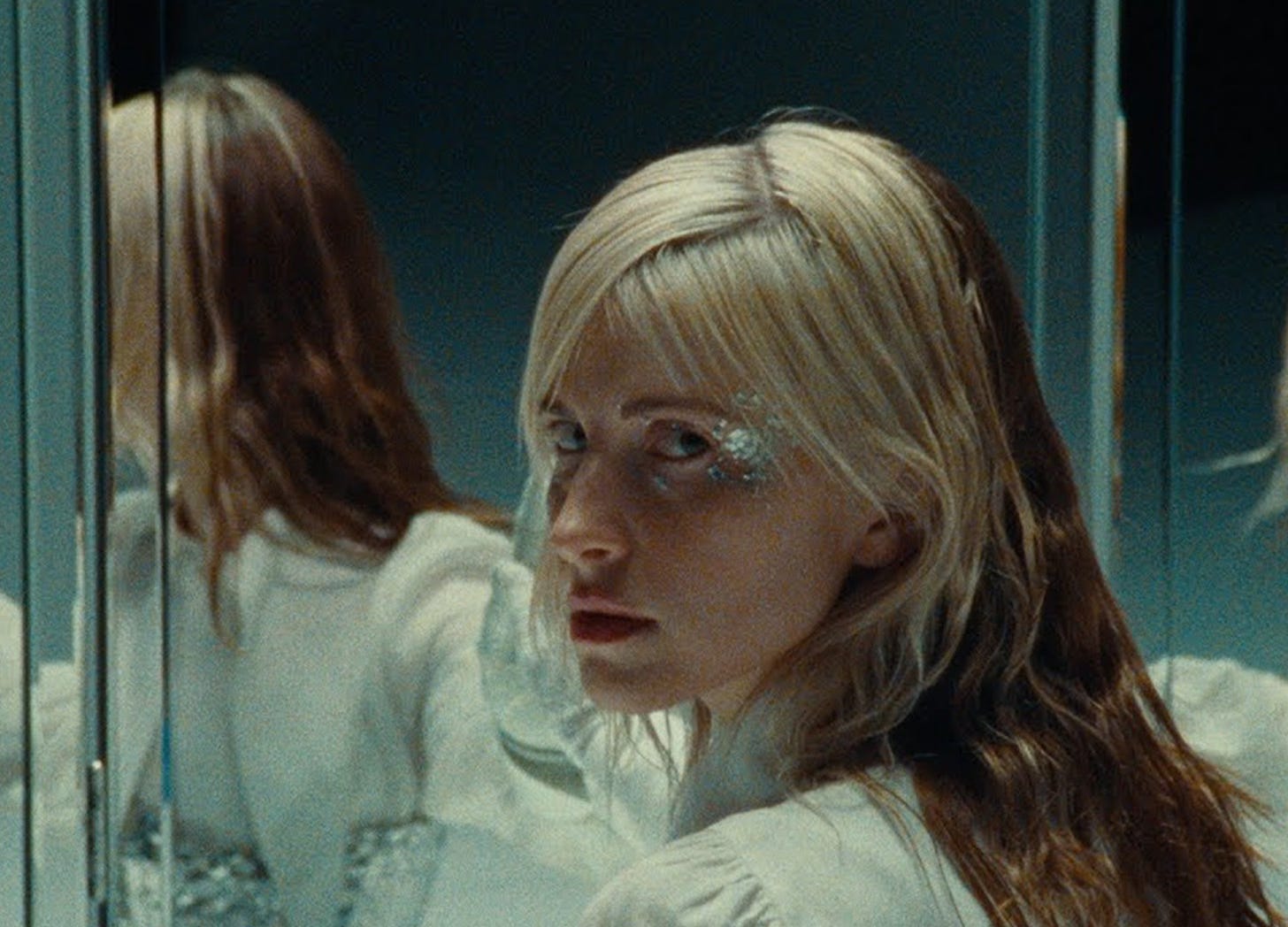
‘Petals for Armor’ is a saga — one that brings you down to earth with a bump, only to remind you that even when falling through the cracks, there is the opportunity to bloom anew. The record, I believe, was ahead of its time - from the influences it infuses, to the challenging subject matter: trauma, isolation, heartbreak, immeasurable rage, grief, loss. The lyricism is naked - candid, peeking beneath the foliage of the rich layers of production.
Hayley’s utilisation of floral imagery isn’t decorative: it’s with purpose, a metaphor for the mess and miracle of regrowth. Flowers wilt, bruise, die - but they also regenerate, much like we do. Each track unfolds like a diary page, carefully pressed with petals — fragile, deliberate, and deeply human — opening it to the world allowing for much needed catharsis.
Weighty it may be, but Hayley wears her heart on her sleeve - and her petals for armor. If this album is to teach us anything, it’s that there’s strength in softness, and healing begins deep in the dirt.
“I hope you will go out and let stories happen to you, and that you will work them, water them with your blood and tears and your laughter till they bloom, till you yourself burst into bloom” - Clarissa Pinkola Estés
As a fellow Paramore/Hayley Williams fan, this is arguably one of my favourite albums of the decade so far, alongside Flowers for Vases and This is Why (the latter of which we got to see Paramore live during this era). Such a brilliant write-up on this album, Eleanor!
What a wonderful and extraordinarily written tribute! Such a special album.